

Recycling Center Near Me for a Faster Cardboard Drop-Off
June 22, 2026
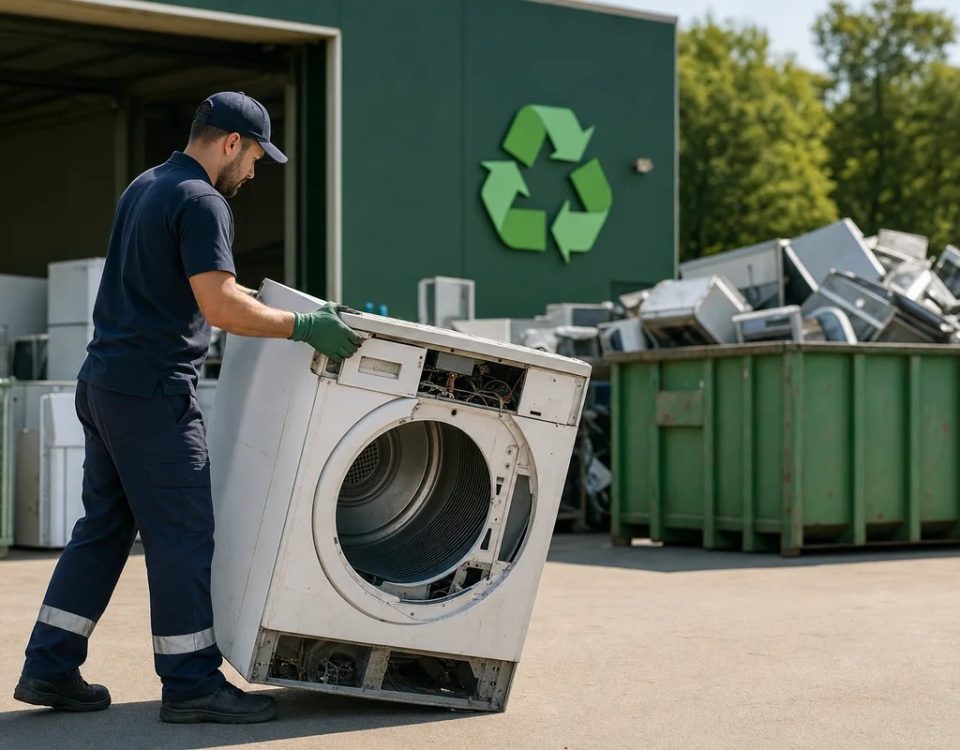
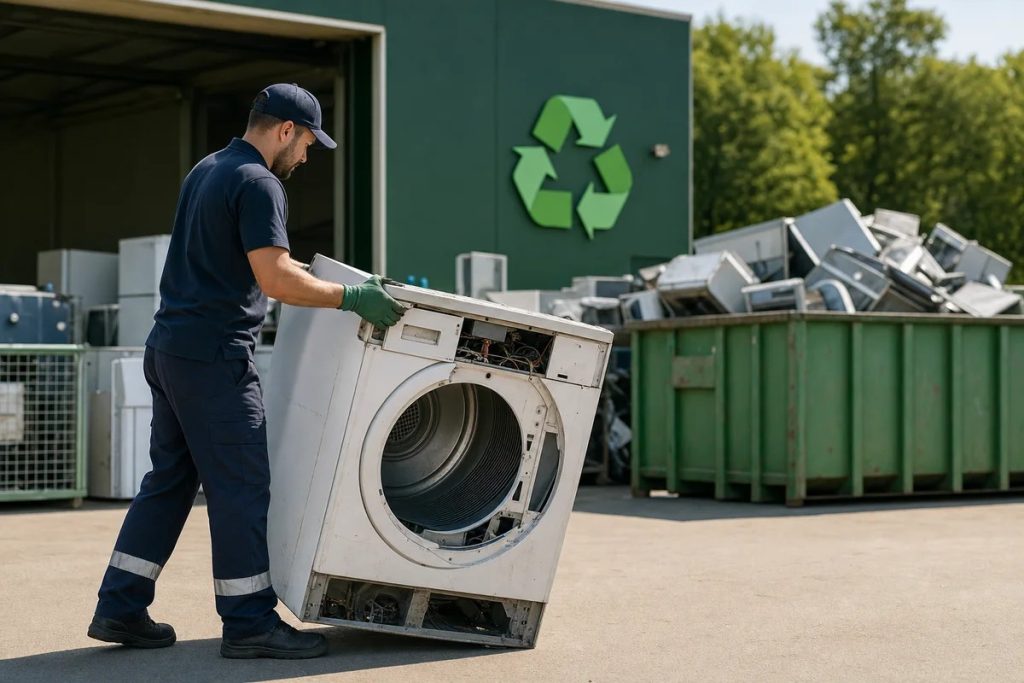
Where Can I Recycle a Broken Dryer?
September 10, 2026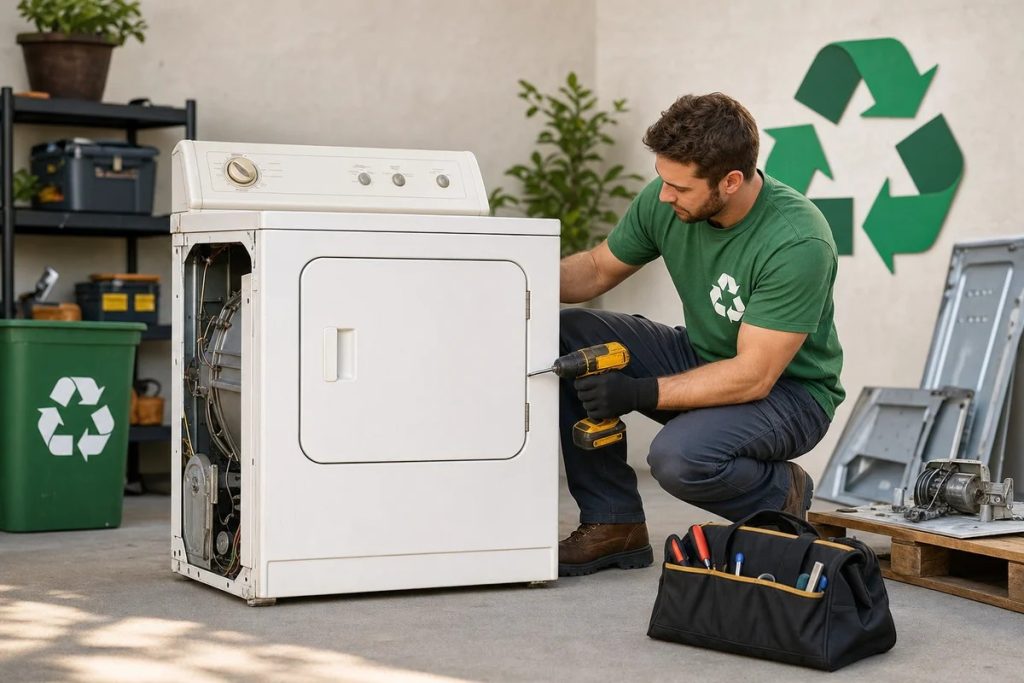
What to know before you recycle an old dryer
When we talk about dryer recycling, we mean a few different paths, not one fixed answer. A working dryer may be reused or donated, a repairable dryer may be worth fixing before it is sent anywhere, and a broken dryer may go straight to drop-off, pickup, or scrap metal recovery. The two biggest filters are simple: safety first, then local acceptance rules. If you want help sorting the route before you move the machine, Clearfield Recycling can point you in the right direction.
That matters because a dryer that runs but has a small issue is not the same as one with burned wiring or heavy rust. The first one might still belong in someone else’s home. The second one usually belongs in recycling services or disposal, after you confirm what your local site will accept.
A simple order for getting an old dryer out the door
We keep the process short so you do not waste time on the wrong lane. First, check whether the dryer still has a useful life. Second, match it to the right outlet, such as reuse, recycling, haul-away, or city pickup. Third, make it safe and easy to move so nobody gets hurt at the door.
- Test the dryer. If it powers on, tumbles, and heats, it may be better for reuse than for the scrap pile.
- Choose the outlet. Use the place that accepts that type of appliance, not the one that is simply closest.
- Prep and move it. Unplug it, clear it out, and make sure the path is open before anyone starts lifting.
1. Check whether the dryer still has a second life
We always start by testing the basics. Turn it on, listen for normal operation, and see whether it heats. If the dryer works and the problem is minor, a donation or resale route usually makes more sense than trying to recycle an old dryer right away. Visible damage changes the decision fast, especially severe rust, broken controls, scorch marks, or unsafe wiring. Those are not cosmetic issues, they are the kind of problems that push the unit toward recycling or disposal.
2. Match the dryer to the right outlet
The right place can be an appliance recycler, a scrap yard, a retailer haul-away program, or a city bulk pickup. The city or recycling center usually sets the rule, so local acceptance matters more than guesswork. If you are not sure which outlet will take it, Clearfield Recycling can help you sort the route before you load the truck. We would rather have you call once than make two trips with a machine that nobody can accept.
3. Make it safe to move
Before you get rid of an old dryer, unplug it or disconnect it safely and do not move it while it is still live. Remove anything loose that can snag, leak, or fall, then close the door and check that the path out of the room is clear. The last look should be practical, not fancy: stable feet, no trailing cord, and enough space to get the appliance through the doorway without dragging it.
Where an old dryer usually goes next
The most common end points are donation, an appliance recycling center, a scrap metal yard, or bulk trash pickup. Donation only makes sense when the dryer still works and someone else can use it. What we buy is the fastest way to confirm whether the appliance fits a given site’s intake rules. Recycling centers and scrap yards are the better fit when the machine is too worn out for reuse but still has recoverable metal inside. Bulk trash is the least attractive option, because it usually treats the dryer as waste instead of material.
Old dryer recycling is usually the smarter move than regular trash because the metal can be recovered. Many dryers are mostly steel, with smaller amounts of wire, aluminum, and mixed parts that can be separated. Some sites take the whole machine. Others want cords, hoses, or add-ons removed first. That is why it pays to check acceptance rules before you load it up. If the plan is wrong, you end up doing all the lifting and still have the dryer in the driveway.
We also see one common split in local rules: some places care only about the appliance type, while others care about the exact condition. A dryer with a gas line attached may be rejected even if the rest of it is fine. That is normal, not a sign you picked the wrong route. It just means the site wants the appliance in a safe, clean form before it enters the yard.
Get the dryer ready before pickup or drop-off
Good prep saves time and keeps a site from turning you away at the gate. For dryer recycling, the small details matter more than most people expect. We are talking about power cords, vent hoses, lint, loose laundry items, and any attachment that can snag during transport. A few minutes of prep makes the handoff faster and usually cleaner too.
Unplug electric dryers and handle gas units carefully
For electric dryers, unplug the unit at the wall before anyone tries to move it. For gas dryers, do not transport it with the gas line attached. Use a qualified technician or local utility guidance for disconnecting the line, then confirm the appliance is safe for transport. Some recyclers will reject gas models if the line has not been removed, so this step is worth doing right the first time.
Remove the clutter recyclers do not want
Take off the vent hose, remove laundry items from the drum, pull away loose cords, and clear off tape, straps, or accessories. We also recommend cleaning out the lint trap area so the appliance is less messy and easier to handle. If the door does not stay shut, secure it so it cannot swing open while the machine is moving.
Pickup or drop-off: which way is easier?
We usually compare four things: truck access, stairs, time, and whether the dryer still works. Pickup makes more sense when the appliance is on an upper floor, too heavy to move safely, or tied to a city bulk schedule. Drop-off is often simpler when you already have a truck or trailer, the site has a staffed intake area, and you want the dryer gone the same day. If you want a straightforward handoff, contact us to check the acceptance rules before you leave home.
If the unit still works, reuse or donation may beat both pickup and drop-off. If it is broken, but the site wants the machine clean, drained, and disconnected, that can still be faster than paying for a full disposal service. The easiest route is the one that fits your access, your schedule, and the condition of the dryer.
Ready to let the dryer go
Pick one route, check the local checklist, and move the appliance safely. The best choice is the one that gets the dryer out without creating a hazard and keeps reusable material out of the trash. If you are still comparing options, contact us before you haul anything.
Questions people ask before dryer recycling
These are the boundary questions that come up most often when you are trying to get rid of an old dryer without wasting a trip.
Can you recycle a dryer that still works?
Yes. A working dryer is often better suited to donation or resale first. If the unit has failed heat, unsafe wiring, or severe rust, recycling usually makes more sense.
What if my dryer is gas and the line is still attached?
Do not transport it with the gas line attached. A qualified technician or local utility guidance is the safer way to disconnect it, and some recyclers will reject the appliance until that line is removed.
Will a scrap yard take the whole appliance?
Some yards do, but many have prep rules or acceptance limits. A common requirement is removing hoses or cords before arrival, so call ahead and ask about appliance acceptance before you load the dryer.
What should I remove before curbside pickup?
Remove laundry, lint, the vent hose, and any loose cords first. The door should be shut and the path to the curb should be clear, because curbside rules are often stricter than drop-off rules.
If you want help confirming the right route for how to recycle an old dryer, reach out to Clearfield Recycling and we will help you check the local acceptance rules before you move it.