Junkyard Near Me: Find the Right Scrap Yard Fast
October 23, 2026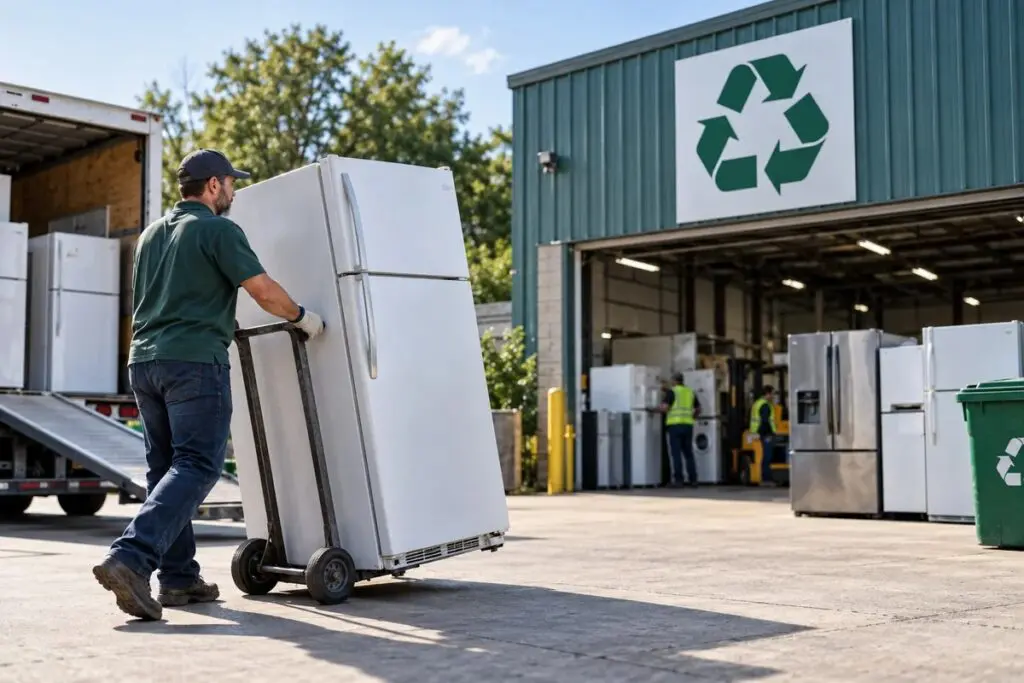
Where can I recycle a refrigerator near me?
The most common local options are appliance recycling centers, scrap metal yards, municipal drop-off sites, and retailer haul-away programs. If you are comparing nearby choices, Clearfield Recycling is one local place to check, but the real question is acceptance, not just distance.
We tell people to check the rules before they drive over. Some sites only take refrigerators after the refrigerant has been recovered, and others want the unit empty, unplugged, and ready to handle. EPA says refrigerants must be removed before recycling or disposal, and some facilities ask for written proof that the recovery was done properly. A site that is a little farther away can still be the better choice if it will accept the fridge without extra steps or surprise fees. ([epa.gov]())
That is why location matters less than eligibility. The closest yard is not useful if it turns away full appliances, requires special paperwork, or charges more than a better-fit site across town. For refrigerator recycling near me searches, the best answer is usually the place that matches your fridge’s condition and your transport setup. If the fridge is oversized, built-in, or down a flight of stairs, the nearest drop-off site may not be practical anyway. In that case, a pickup or retailer take-back can be the better fit because it solves the transport problem first and the recycling question second.
Which local places usually take old refrigerators
For appliance recycling near me, compare the local options side by side before you load the fridge. The table below shows what most places accept, how you usually get it there, and the issue that causes the most headaches.
| Option | What it usually accepts | Drop-off or pickup | Most common limit |
|---|---|---|---|
| Scrap yard | Mostly metal appliances, sometimes complete refrigerators if safety rules are met | Drop-off | Refrigerant rules, doors, and contamination |
| Appliance recycler | Complete fridges, often with proof of refrigerant recovery | Usually drop-off, sometimes pickup | Paperwork, cleanliness, and appointment timing |
| City recycling center | Household appliances on approved days or at designated sites | Drop-off | Residency rules, scheduled hours, and fees |
| Retailer haul-away | Old fridge tied to a new appliance delivery | Pickup | Requires a purchase or delivery window, plus access rules |
| Junk removal | Most appliances, even awkward ones, if they can be moved safely | Pickup | Higher cost, stairs, and contamination concerns |
Scrap yards usually care most about metal content and safety. Appliance recyclers care more about condition and refrigerant status. City centers care more about schedule and residency rules. Retailer haul-away is easiest if you are replacing the fridge the same day, while junk removal is the fallback when you want the whole thing gone without loading it yourself.
If the fridge is mostly metal and already cleaned out, a scrap yard is often the simplest option. If it still contains refrigerant, an appliance recycler or certified recovery program is the safer bet. If convenience matters more than scrap value, retailer haul-away or junk removal usually makes the most sense. Clearfield Recycling fits into that same decision rule, because the best site is the one that can actually take your unit as it sits.
For more related options, see our recycling services page and our what we buy page.
What happens when you drop off a refrigerator for recycling
Most drop-offs start the same way: you arrive, the staff points you to the unloading area, and you may be asked for ID, a receipt, or basic paperwork. Then someone checks that the fridge is empty, unplugged, and safe to handle before it is accepted.
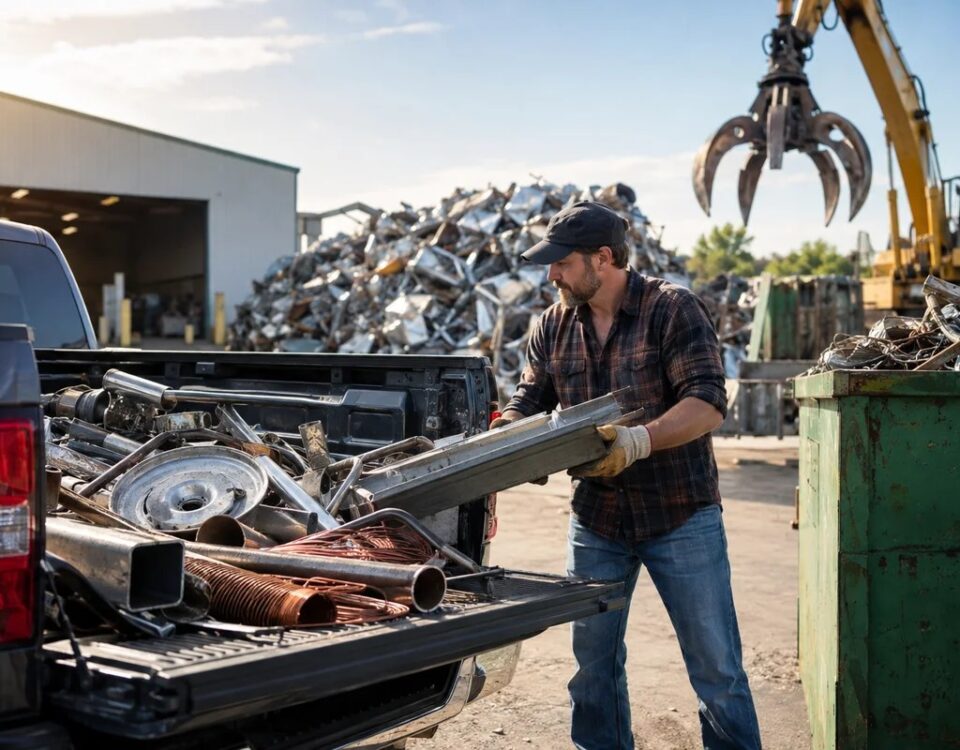
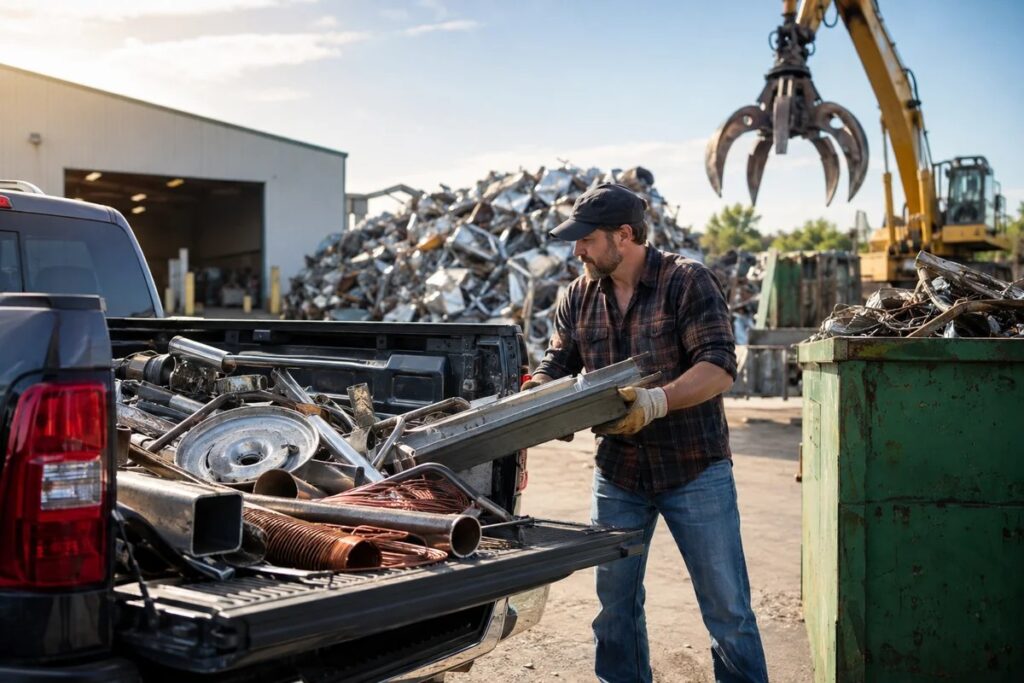
At a scrap-focused yard, the fridge may be weighed and sorted with steel or other metals. Some yards pay by material, while others only accept complete appliances as a drop-off item with no payout. That split is common across the industry, so do not assume every yard handles a refrigerator the same way.
The difference between a complete refrigerator, a stripped appliance, and a unit with visible contamination matters. A complete unit may be accepted as appliance scrap, a stripped one may be treated as mixed metal, and a contaminated or badly damaged fridge may be rejected or set aside for special handling. On arrival, the staff may direct you to a weigh-in point before or after unloading, and some sites will inspect whether the compressor area, doors, and interior are all safe enough to process. A damaged exterior does not always disqualify a fridge, but broken parts, chemical leaks, or obvious residue can change how the site handles it.
How to prep your fridge so it gets accepted
Preparing the appliance ahead of time cuts down on rejection at the gate. The basic prep is simple:
- Unplug the fridge early enough for it to fully defrost.
- Remove all food, shelves that will fall loose, and anything stored in the doors.
- Wipe spills and dry the interior.
- Secure or tape the power cord so it does not drag.
- Keep the fridge upright during transport whenever possible.
If the unit has an ice maker or water line, disconnect and drain those lines before moving it. Refrigerant recovery is usually handled by a certified technician or an approved program, not by the average drop-off site. If the fridge was stored on its side, let it stand upright before transport so fluids can settle and the unit is easier to move safely. EPA also notes that some facilities require written proof that refrigerant was removed before the appliance arrives. ([epa.gov]())
The most common reasons a site turns a refrigerator away are lingering food, leaking fluids, unsafe loading, missing refrigerant documentation, or a unit that is too contaminated to handle safely. If you are unsure, call ahead before loading it. A clean, dry, upright fridge is far more likely to make it through intake without extra questions.
When pickup, haul-away, or retailer take-back makes more sense
For fridge disposal near me, the better option is often the one that matches how the unit can be moved safely. If you do not have a truck, cannot lift a heavy appliance, or do not want to wrestle a full-size refrigerator through a hallway, pickup usually beats drop-off.
Retailer haul-away, junk removal, and municipal pickup differ in a few practical ways. Retailer haul-away is often tied to a new appliance delivery, junk removal may handle the move from inside the house but usually costs more, and city pickup can be limited to specific days or curbside placement rules. Some municipal programs require advance scheduling, a household limit, or a tag for the appliance, so the timing matters more than people expect. If you need someone to disconnect the unit or carry it down stairs, ask that question before you book.
A working fridge may also be a candidate for donation, repair, or resale, but only if it is clean, safe, and still worth moving. A unit that runs, holds temperature, and has all its shelves may be worth another round of use. If it is leaking, missing parts, or already dead, recycling or pickup is usually the better call. If you want help sorting the options, contact Clearfield Recycling through our contact page and ask what they can take that day.
Questions people ask before recycling a refrigerator
These are the boundary questions that decide whether your fridge gets accepted or bounced at the gate. Ask the site before you load it, because acceptance rules can change by yard, city program, and appliance condition.
Can I recycle a refrigerator if it still has refrigerant?
Most recycling yards will not take it as-is. EPA requires refrigerants to be removed before recycling or disposal, so the fridge usually needs professional recovery first. A technician or approved recovery program can provide proof of recovery, which many sites ask for before they unload the unit. Call the site first. ([epa.gov]())
Will a scrap yard take a refrigerator with the doors still on?
Some yards accept it, but others require the doors to be removed or secured before drop-off. That rule is usually about child safety and handling, especially for full-size refrigerators. Call the site first.
Do recycling centers pay for old refrigerators?
Some scrap buyers pay by weight, but many appliance drop-off sites do not pay for complete refrigerators. Payment is more likely when the unit is clean metal rather than a contaminated appliance. Call the site first.
What if the fridge is leaking, moldy, or full of old food?
Clean it out before you bring it, because many sites reject contaminated refrigerators or add a handling fee. Wear gloves, contain any leak with absorbent material, and call ahead if there is visible mold or spoiled food. Call the site first.
If you want to check acceptance before you make the trip, contact Clearfield Recycling through our contact page and ask what they can take that day. It is the fastest way to avoid an unnecessary haul.